 Development Boards
 Arduino
 ESP32
ESP32 STM32
STM32 Raspberry Pi
 Programmers & Debuggers
 IoT & Wireless
 WiFi & Espressif Ecosystem
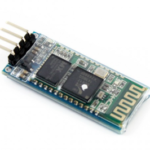 Bluetooth & BLE Modules
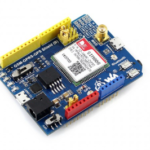 GSM, GPRS & GPS (Cellular & Location)
 LoRa & Long Range Radio
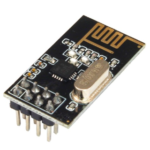 RF (Radio Frequency) Wireless
 IoT Antennas & Cables
 Zigbee & Home Automation
 Biometrics & Touch
 Environmental Sensors
 Current & Voltage
 Gas & Air Quality
 Motion & Distance
 Solar panel module
 Specialty Sensors
 Microcontrollers & Processors
 Power Management ICs
 Motor & Load Drivers
 Analog & Linear ICs
 Logic ICs
 Interface & Communication
 Memory Chips
 Discrete Semiconductors & Protection
 Diodes & Rectifiers
 Transistors (BJT – Bipolar Junction)
 MOSFETs & FETs
 Thyristors & AC Control
 IGBTs
IGBTs Protection Devices
 Passive Components
 Resistors (Fixed)
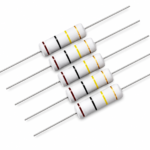 Through Hole Resistors
 Carbon Film (1/4W)
 Carbon Film (1/2W)
 Carbon Film (1W)
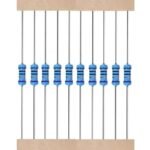 Metal Film (1% Tolerance – 1/4W)
 Metal Film (1% Tolerance – 1/2W)
 Metal Film (1% Tolerance – 1W)
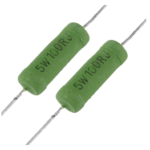 Wire Wound (High Power – 5W)
 Wire Wound (High Power – 10W)
 SMD Resistors
 Resistor Networks & Arrays
 Potentiometers & Variable Resistors
 Capacitors
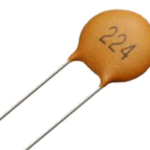 Ceramic Disc Capacitors
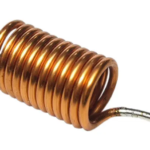 Inductors, Coils & Transformers
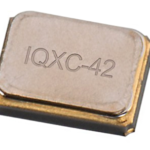 Crystals & Frequency Control
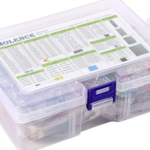 Passive Component Kits
 Prototyping Boards & Breadboards

 Displays
 LCD Character Displays
 7-Segment & LED Bars
 TFT Displays
 Dot Matrix Displays
 Optoelectronics
 LEDs – Through Hole
 SMD LEDs
 LED Strips & Addressable
 LEDs – High Power
 LDR
LDR UV LED
 Infrared (IR) & Receivers
 Laser modules
 Wires
Wires Enamelled Copper Wire
 Cables & Adapters
 Connectors
 Terminals
 Cable Glands & Conduit
 Cable Accessories
 Switches & Buttons
 Slide Switches
 Rocker Switches
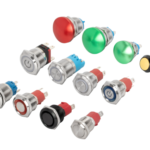 Metal / Anti Vandal Switches
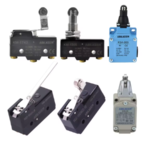 Limit Switches
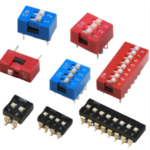 DIP Switches
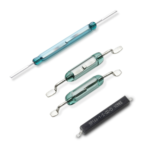 Reed Switches
 Relays & Modules
 Automotive Relays
 Cube Relays
 Industrial Relays
 Power Relays
 Relay Modules
 Signal Relays
 Solid State Relays (SSR)
 Solenoids & Valves
 Solenoid Valves
 Door Lock Solenoids
 Motors & Actuators
 Drivers & Controllers
 Linear Motion & Structure
 Robot Mechanics
 Pneumatics & Fluid
 Screws & Bolts
 Allen (Socket Head Cap) Screws
 Machine Screws (Phillips)
 Nuts & Inserts
 Washers, Spacers & Rings
 Circlips & E-Clips
 PCB Spacers & Standoffs
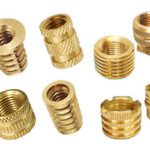 Brass inserts
 Others
 Disc Magnets
 Cylinder Magnets
 Ring Magnets
 Sphere Magnets
 Block Magnets
 Countersunk Magnets
 Diametrically Magnetized Magnets
 Soldering & Rework
 Soldering Irons & Stations
 Soldering Iron Tips & Bits
 Rework Stations
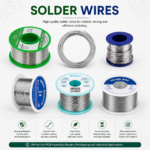 Solder Wire
 Flux & Paste
 Desoldering Tools
 Accessories & PCB Repair
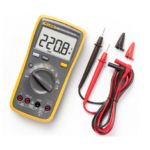 Test & Measurement
 Hand Tools
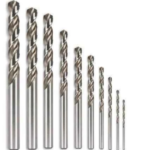 Drilling & Threading
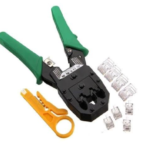 Crimping Tools
 Workshop Essentials
 Power Sources

 3D Printer filaments
 PLA+
PLA+ PLA-CF
 PLA Metallic
 PETG-CF

How to Read Resistor Color Codes (3, 4, 5 & 6 Band) — Free Online Calculator

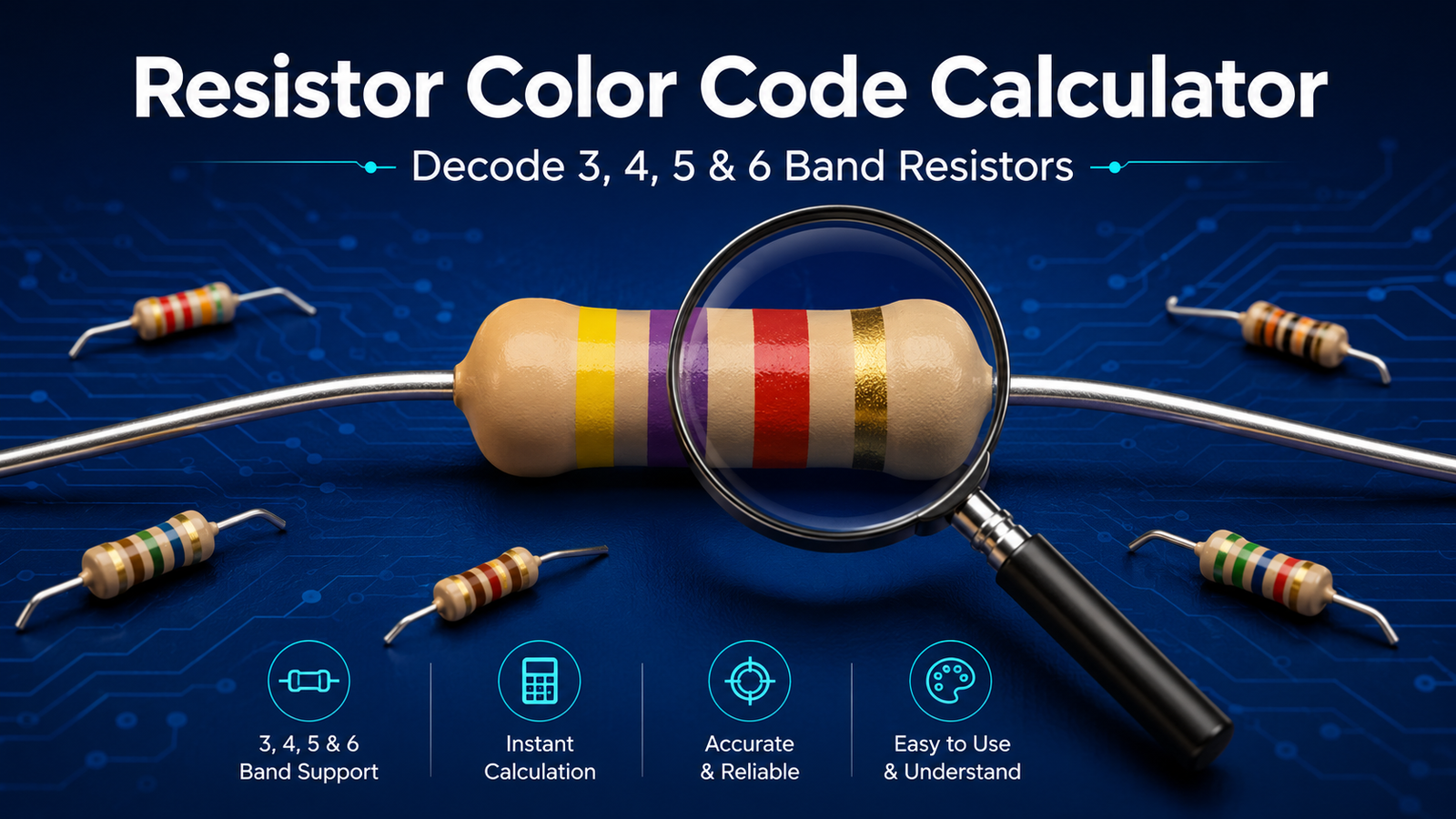
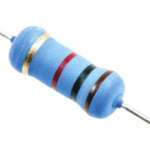
Every through-hole resistor carries its value printed right on its body — not in numbers, but in colored bands. Once you know how to read them, you can identify any resistor in seconds without a multimeter. This guide explains the color code system for 3, 4, 5 and 6-band resistors, and if you want the answer instantly, just use our free tool:
Open the Resistor Color Code Calculator →
How the Color Code System Works
Each color represents a digit from 0 to 9. The first bands give the significant digits, the next band is a multiplier (how many zeros to add), and the band after that tells you the tolerance — how far the real value may deviate from the marked value. The system is defined by the international standard IEC 60062, so the same colors mean the same thing on every resistor in the world.
| Color | Digit | Multiplier | Tolerance |
|---|---|---|---|
| Black | 0 | ×1 | — |
| Brown | 1 | ×10 | ±1% |
| Red | 2 | ×100 | ±2% |
| Orange | 3 | ×1k | — |
| Yellow | 4 | ×10k | — |
| Green | 5 | ×100k | ±0.5% |
| Blue | 6 | ×1M | ±0.25% |
| Violet | 7 | ×10M | ±0.1% |
| Grey | 8 | ×100M | ±0.05% |
| White | 9 | ×1G | — |
| Gold | — | ×0.1 | ±5% |
| Silver | — | ×0.01 | ±10% |
A classic mnemonic to remember the digit order: Black Brown Red Orange Yellow Green Blue Violet Grey White — "Better Be Right Or Your Great Big Venture Goes West."
4-Band Resistors (the most common)
Most general-purpose carbon film resistors use 4 bands: two digits, a multiplier, and a tolerance band (usually gold for ±5%).
Example: Yellow – Violet – Red – Gold
Yellow = 4, Violet = 7, Red = ×100 → 4700 Ω = 4.7 kΩ ±5%
5-Band Resistors (precision)
Metal film precision resistors add a third digit for accuracy: three digits, a multiplier, and a tolerance band (usually brown for ±1%).
Example: Brown – Black – Black – Red – Brown
1, 0, 0, ×100 → 10,000 Ω = 10 kΩ ±1%
3-Band and 6-Band Resistors
A 3-band resistor is simply a 4-band resistor without the tolerance band — tolerance defaults to ±20%. A 6-band resistor is a 5-band precision resistor with one extra band for the temperature coefficient (ppm/K), which tells you how much the resistance drifts as the component heats up. Brown (100 ppm/K) is the most common.
Which Band Do I Read First?
Hold the resistor so the tolerance band (gold, silver, or the band spaced slightly apart from the others) is on the right. Then read left to right. If there's no obvious gap, the band closest to a lead is band 1.
Too Many Colors to Remember? Use the Calculator
Our free Resistor Color Code Calculator works both ways:
- Colors → Resistance: pick the band colors on an interactive resistor and read the value, tolerance and range instantly.
- Resistance → Colors: type a value (say 4.7 kΩ ±5%), choose the number of bands, and it draws the color bands for you — perfect when you're picking resistors out of a mixed box.
Need Resistors for Your Project?
POGOLABZ stocks carbon film and metal film resistors in all common values and wattages, along with breadboards, development boards, sensors and everything else your build needs — shipped across India from Ernakulam, Kerala.