
 Development Boards
 Arduino
 ESP32
ESP32 STM32
STM32 Raspberry Pi
 Programmers & Debuggers
 IoT & Wireless
 WiFi & Espressif Ecosystem
 Bluetooth & BLE Modules
 GSM, GPRS & GPS (Cellular & Location)
 LoRa & Long Range Radio
 RF (Radio Frequency) Wireless
 IoT Antennas & Cables
 Zigbee & Home Automation
 Biometrics & Touch
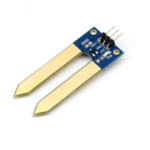 Environmental Sensors
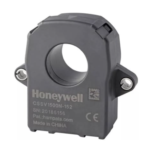 Current & Voltage
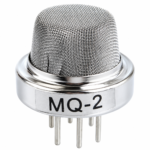 Gas & Air Quality
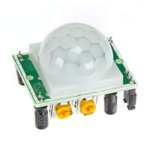 Motion & Distance
 Solar panel module
 Specialty Sensors
 Microcontrollers & Processors
 Power Management ICs
 Motor & Load Drivers
 Analog & Linear ICs
 Logic ICs
 Interface & Communication
 Memory Chips
 Discrete Semiconductors & Protection
 Diodes & Rectifiers
 Transistors (BJT – Bipolar Junction)
 MOSFETs & FETs
 Thyristors & AC Control
 IGBTs
IGBTs Protection Devices
 Passive Components
 Resistors (Fixed)
 Through Hole Resistors
 Carbon Film (1/4W)
 Carbon Film (1/2W)
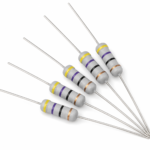 Carbon Film (1W)
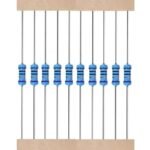 Metal Film (1% Tolerance – 1/4W)
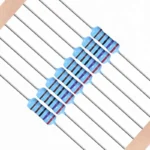 Metal Film (1% Tolerance – 1/2W)
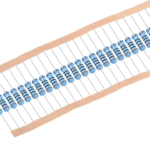 Metal Film (1% Tolerance – 1W)
 Wire Wound (High Power – 5W)
 Wire Wound (High Power – 10W)
 SMD Resistors
 Resistor Networks & Arrays
 Potentiometers & Variable Resistors
 Capacitors
 Ceramic Disc Capacitors
 Inductors, Coils & Transformers
 Crystals & Frequency Control
 Passive Component Kits
 Prototyping Boards & Breadboards

 Character & Segment Displays
 7-Segment & LED Bars
 Graphic & Matrix Displays
 TFT Displays
 Dot Matrix Displays
 LEDs
LEDs LEDs – Through Hole
 LEDs – High Power
 Addressable LEDs
 Laser, UV & IR
 Laser modules
 Infrared (IR) & Receivers
 Light Sensors & Optocouplers
 LDR
LDR
 Wires
Wires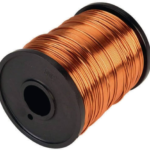 Enamelled Copper Wire
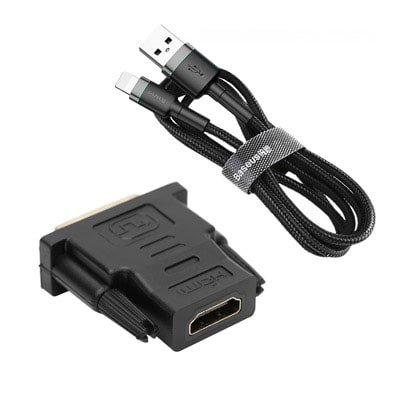 Cables & Adapters
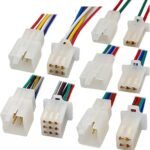 Connectors
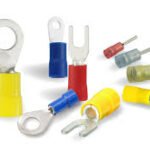 Terminals
 Cable Glands & Conduit
 Cable Accessories
 Switches & Buttons
 Slide Switches
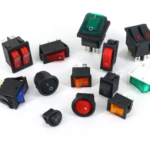 Rocker Switches
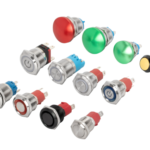 Metal / Anti Vandal Switches
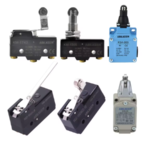 Limit Switches
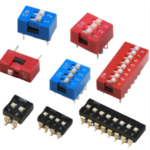 DIP Switches
 Reed Switches
 Relays & Modules
 Automotive Relays
 Cube Relays
 Industrial Relays
 Power Relays
 Relay Modules
 Signal Relays
 Solid State Relays (SSR)
 Solenoids & Valves
 Solenoid Valves
 Door Lock Solenoids
 Motors & Actuators
 Drivers & Controllers
 Linear Motion & Structure
 Robot Mechanics
 Pneumatics & Fluid
 Screws & Bolts
 Allen (Socket Head Cap) Screws
 Machine Screws (Phillips)
 Nuts & Inserts
 Washers, Spacers & Rings
 Circlips & E-Clips
 PCB Spacers & Standoffs
 Brass inserts
 Others
 Disc Magnets
 Cylinder Magnets
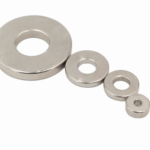 Ring Magnets
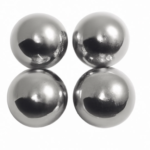 Sphere Magnets
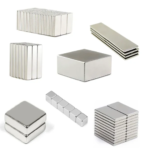 Block Magnets
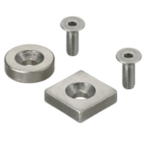 Countersunk Magnets
 Diametrically Magnetized Magnets
 Soldering & Rework
 Soldering Irons & Stations
 Soldering Iron Tips & Bits
 Rework Stations
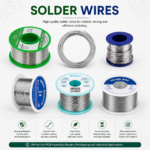 Solder Wire
 Flux & Paste
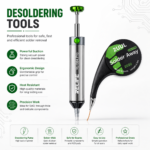 Desoldering Tools
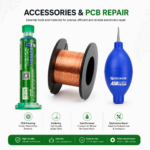 Accessories & PCB Repair
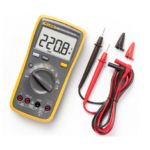 Test & Measurement
 Hand Tools
 Drilling & Threading
 Crimping Tools
 Workshop Essentials
 Power Sources

 3D Printer filaments
 PLA+
PLA+ PLA-CF
 PLA Metallic
 PETG-CF

Soldering iron tip guide

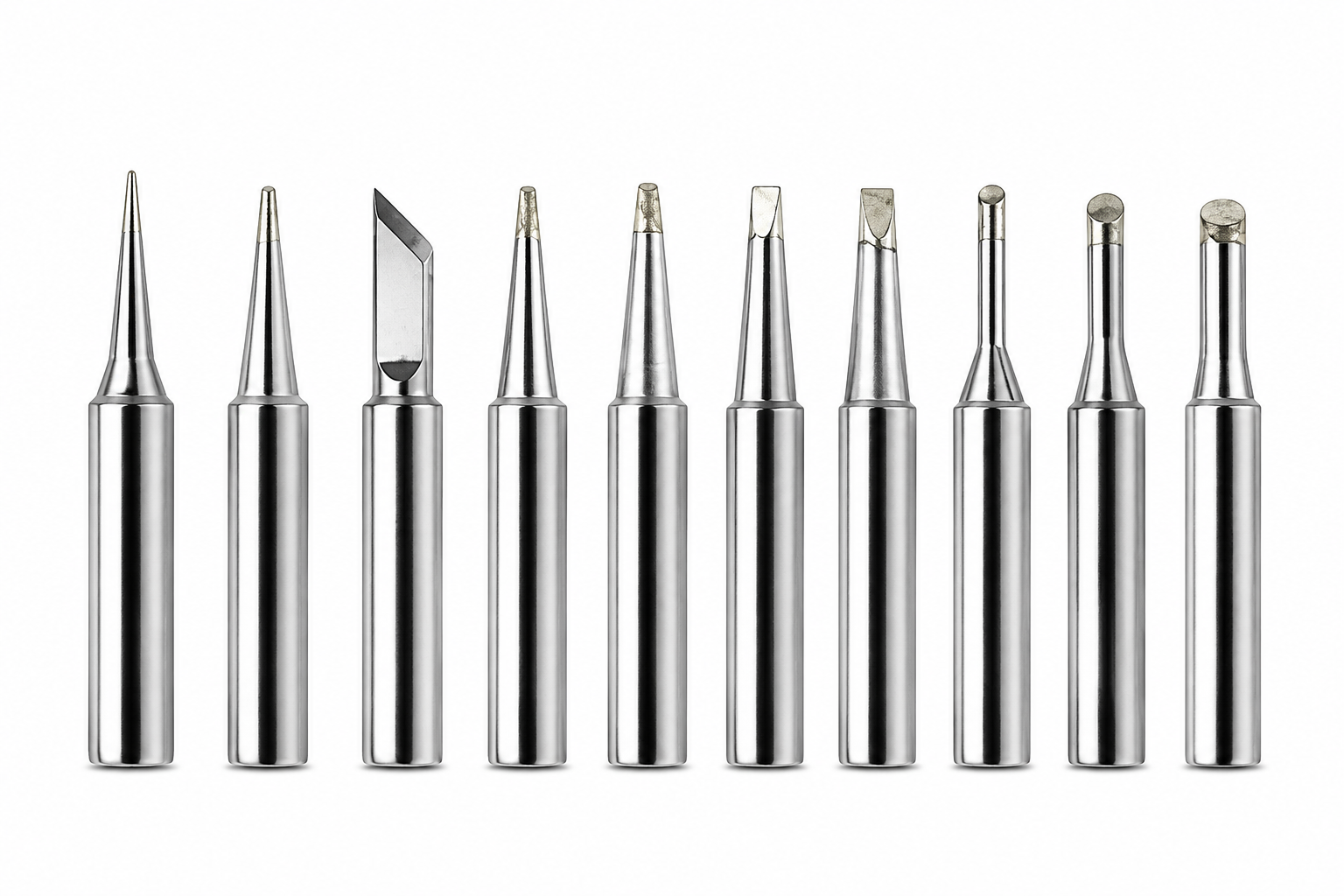
Soldering Iron Tip Guide: How to Pick the Right Tip for the Job
Most soldering problems people blame on flux, solder wire, or a "bad" iron actually come down to one thing: the wrong tip. A cold-looking joint, solder that won't flow, a component that takes forever to heat up — swap the tip and half these problems disappear. This guide walks through the common tip shapes, how to size them, what the coating actually does, and how to keep a tip alive instead of replacing it every month.
Why the Tip Matters More Than the Iron's Wattage
A soldering iron's heater controls how much power is available, but the tip decides how that heat actually reaches the joint. Heat transfer depends on contact area and tip mass — a tip with more surface touching the pad and the component lead will move heat faster than a high-wattage iron pressed against a joint with a tiny point tip. This is why a 60W iron with the right chisel tip can outperform an 80W iron with a fine micro conical tip on a big ground pad.
The takeaway: match the tip to the job first, and treat wattage as a secondary factor.
Common Tip Shapes and What They're Actually For
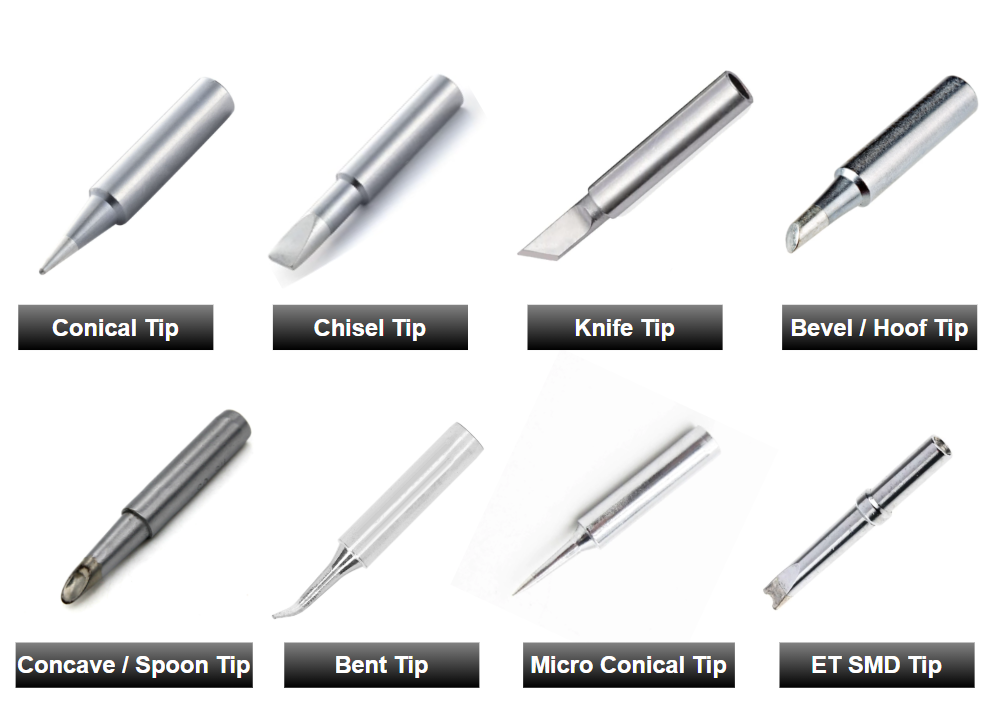
Chisel Tip
Flat on two sides with a tapered edge — the general-purpose workhorse. A 2mm chisel handles the majority of through-hole soldering and most SMD components sized 0805 and up. The flat face gives good, even heat transfer, which makes it forgiving for beginners and fast for production work.
Best for: through-hole components, wires and cables, connectors, general PCB work.
Conical Tip
A sharp point that concentrates heat into a tiny area. Great for precision but weak on heat transfer to anything larger, since so little metal is actually touching the joint.
Best for: fine-pitch SMD, tight component spacing, touch-up work, jewelry-level detail soldering.
Bevel / Hoof Tip
Cut at an angle to create a scooped, concave face. This shape holds a small pool of molten solder against the tip, which makes it the preferred choice for drag soldering fine-pitch ICs (QFPs, SOICs) where you're pulling a bead of solder across a row of pins in one motion.
Best for: drag soldering, flat-pack ICs, SOT/SOIC packages, reflow touch-ups.
Knife Tip
Shaped like a small blade with a sharp edge. Useful for clearing solder bridges and for drag soldering in tight spaces where a chisel is too wide to fit between pins.
Best for: bridge removal, tight-pitch drag soldering, precision rework.
Bent Tip
Same working face as a standard chisel or conical tip, but set on an angled shaft instead of a straight one. The bend lets you reach a joint from the side rather than head-on, which matters when the iron's barrel or handle would otherwise collide with an enclosure wall or a tall component nearby.
Best for: soldering inside enclosures, angled connectors, tight spots where a straight tip can't approach the joint directly.
Micro Conical Tip
An extra-fine version of the standard conical tip, often 0.2mm–0.5mm at the point. Built for the smallest, densest work where even a standard conical tip is too coarse to fit between pins or pads.
Best for: 0201/0402 passives, fine-pitch BGA rework, micro-soldering, wearables and wire-level repair work.
Concave / Spoon Tip
A rounded, scooped tip similar to a bevel but with a deeper curve, designed to cradle a wire or small lead while heating it evenly from multiple sides at once.
Best for: soldering wires to pads, small connector pins, jobs where you need the tip to hold the part steady while it heats.
ET SMD Tip
A compact, flat-faced tip built specifically for tight-pitch SMD work — narrower than a standard chisel but with more contact area and heat mass than a micro conical, striking a middle ground between precision and heat transfer.
Best for: fine-pitch SMD ICs, small chip components (0402/0603), compact PCB assembly work.
Tip Size: Why Bigger Isn't Always Better
Tip size (usually the diameter in mm, e.g. 1.0mm, 2.0mm, 3.2mm) controls heat capacity, not just how fine the point is. A small tip on a big joint loses heat faster than you can add solder, giving you a dull, poorly-wetted joint. A large tip on a tiny SMD pad will bridge adjacent pins and can lift the pad off the board from excess heat concentrated in a small footprint.
A practical rule for a general electronics bench: keep a 1.0mm–1.2mm conical or bevel tip for fine SMD, a 2.0mm chisel as the daily driver, and a wider 3.0mm+ chisel on hand for connectors and heavy grounds.
What the Tip Coating Actually Does
[INSERT TIP CROSS-SECTION / COATING DIAGRAM HERE]
Modern soldering tips are copper at the core (for heat conductivity) with a plated iron layer on the working surface, and often a nickel or chrome barrier layer underneath the iron to stop the copper from dissolving into the molten solder over time. This is why you should never file or sand a modern tip to "clean" it — you'll cut through the iron plating and expose bare copper, which will erode away in a few uses.
This also means tinning matters structurally, not just cosmetically. The thin solder layer on the tip protects the iron plating from oxidizing between uses. A dry, untinned tip left to sit will oxidize and eventually pit, shortening its life regardless of brand or price.
Matching a Tip to the Task
| Task | Recommended Tip |
|---|---|
| General through-hole soldering | 2.0mm Chisel |
| Fine-pitch SMD (0603 and smaller) | 1.0mm Conical or fine Bevel |
| Drag soldering QFP/SOIC | Bevel / Hoof |
| Desoldering solder bridges | Knife |
| Connectors, thick wires, ground planes | 3.0mm+ Wide Chisel |
| Tight enclosures, angled access points | Bent |
| 0201/0402 passives, micro-soldering | Micro Conical |
| Wire-to-pad soldering | Concave / Spoon |
| Fine-pitch SMD ICs, compact assembly | ET SMD |
Tip Care and Maintenance
[INSERT TIP CLEANING TOOLS IMAGE HERE]
Clean Between Joints
Wipe the tip on a brass wire cleaner (dry) or a damp cellulose sponge every few joints to remove built-up flux and oxidized solder. Brass cleaners are gentler on tip temperature since they don't cool the tip the way a wet sponge does, and they don't require keeping water on the bench.
Re-tin Before You Put the Iron Down
Always leave a fresh coat of solder on the tip before switching off or setting the iron in its stand for a break. A bare tip sitting hot in open air is what causes most premature tip failure through oxidation.
Never File or Sand the Tip
If a tip is heavily oxidized or pitted, use a dedicated tip tinner/activator (a mildly acidic paste) rather than abrasives. Filing removes the protective plating and effectively ends the tip's life on the spot.
Control the Temperature
Running an iron hotter than necessary "to solder faster" accelerates oxidation and shortens tip life without actually improving joint quality. Most leaded solder work sits comfortably around 320–350°C; lead-free solder typically needs 350–380°C. Set the lowest temperature that still wets solder quickly and reliably.
Store It Dry and Tinned
When a tip is going into storage for more than a day, tin it heavily with solder first — this coating protects it until the next use. Keep spare tips in their original packaging or a dry container, away from humidity.
Common Mistakes That Kill Tips Early
- Leaving the iron on at full temperature for long idle periods
- Using a wet sponge that's soaking rather than just damp, causing thermal shock to the tip
- Filing or scraping the tip to remove oxidation
- Using flux-core solder with excessive flux, which leaves heavy carbon residue that's harder to clean
- Storing an un-tinned tip after the last use of the day
Quick FAQ
How long should a soldering tip last?
With proper cleaning, tinning, and temperature control, a good-quality tip can last months to years of regular use. Most tips that fail early do so from oxidation or physical damage, not normal wear.
Can I use the same tip for SMD and through-hole work?
A mid-size chisel (2.0mm) can handle both reasonably well, but dedicated tips for each will give faster, cleaner results — especially on fine-pitch SMD.
Why does my tip turn black and stop taking solder?
That's oxidation, usually from running too hot, sitting idle without re-tinning, or heavy flux residue buildup. Clean and re-tin immediately; if solder still won't stick, try a tip tinner/activator before replacing it.
Are all tips interchangeable between iron brands?
No — tip shanks vary by manufacturer and even by product series (e.g. different diameter or barrel length). Always check the specific tip series compatible with your iron/station before buying.
[INSERT PRODUCT RANGE / SHOP-THE-LOOK IMAGE HERE]
Whatever the job, matching the tip shape and size to the work — and keeping it clean and tinned — will do more for solder joint quality than almost any other single upgrade on the bench.