How to Read Ceramic Capacitor Codes
Ceramic disc capacitors are usually too small to print a full value like “470 picofarads” on the body, so manufacturers use a compact numeric code instead. Once you know how to decode it, you can identify any ceramic capacitor’s value in seconds — no datasheet required.
How to Read the Code
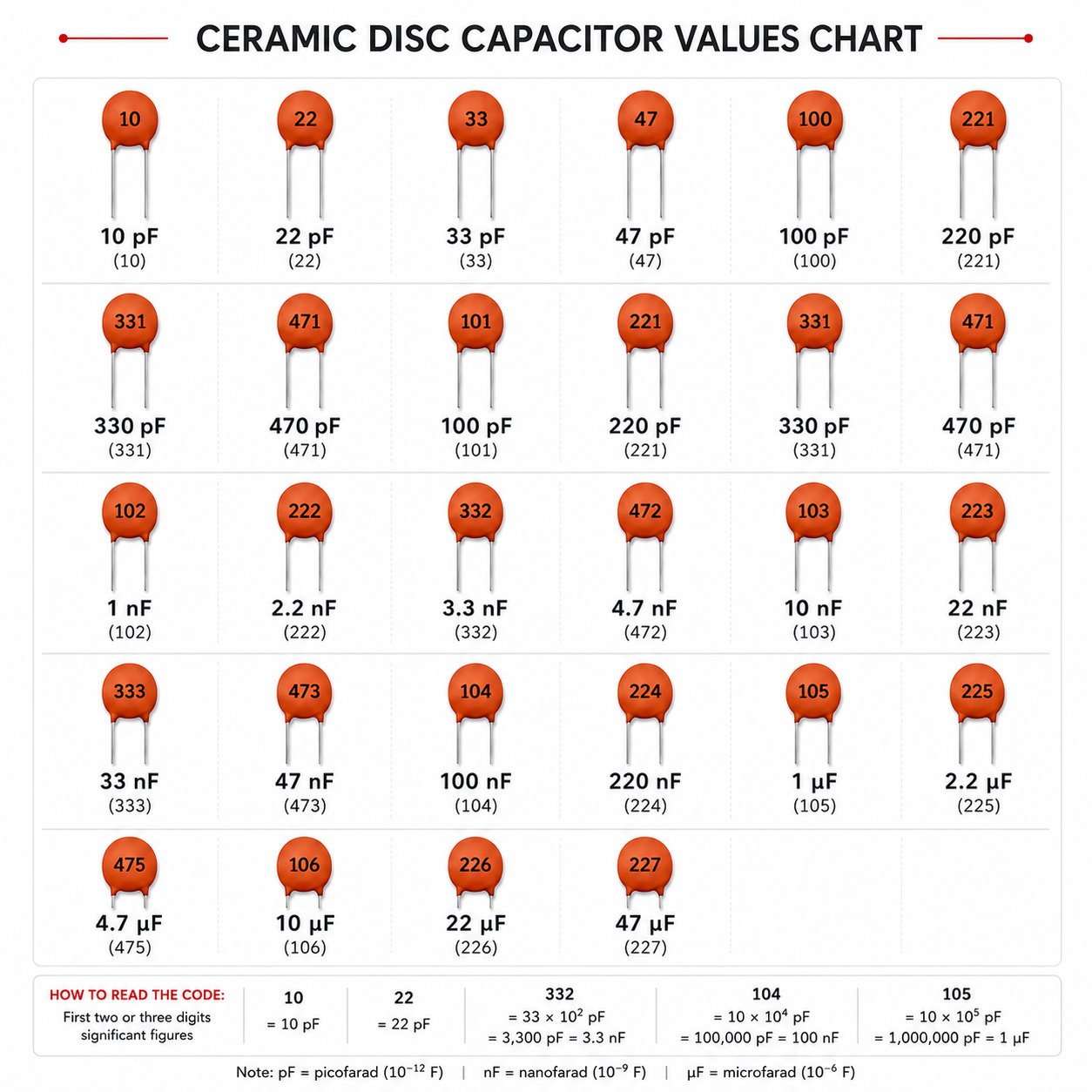
Most ceramic capacitors use a 2 or 3-digit code, always read in picofarads (pF) unless stated otherwise:
- 2-digit codes (e.g. 47, 22) are read directly as the value in pF — no multiplier involved.
- 3-digit codes follow the format XY-Z: the first two digits (X, Y) are the significant figures, and the third digit (Z) tells you how many zeros to add.
Example: Code 104 → 10 × 10⁴ pF = 100,000 pF = 100nF = 0.1μF (this is the most common capacitor value you’ll ever see, used constantly for decoupling).
Capacitor Code Reference Table
| Code | Value (pF) | Value (nF / μF) |
|---|
| 10 | 10 pF | 0.01 nF |
| 22 | 22 pF | 0.022 nF |
| 33 | 33 pF | 0.033 nF |
| 47 | 47 pF | 0.047 nF |
| 100 / 101 | 100 pF | 0.1 nF |
| 221 | 220 pF | 0.22 nF |
| 331 | 330 pF | 0.33 nF |
| 471 | 470 pF | 0.47 nF |
| 102 | 1,000 pF | 1 nF |
| 222 | 2,200 pF | 2.2 nF |
| 332 | 3,300 pF | 3.3 nF |
| 472 | 4,700 pF | 4.7 nF |
| 103 | 10,000 pF | 10 nF |
| 223 | 22,000 pF | 22 nF |
| 333 | 33,000 pF | 33 nF |
| 473 | 47,000 pF | 47 nF |
| 104 | 100,000 pF | 100 nF / 0.1 μF |
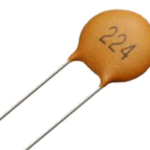
| 224 | 220,000 pF | 220 nF / 0.22 μF |
| 105 | 1,000,000 pF | 1 μF |
| 225 | 2,200,000 pF | 2.2 μF |
| 475 | 4,700,000 pF | 4.7 μF |
| 106 | 10,000,000 pF | 10 μF |
| 226 | 22,000,000 pF | 22 μF |
| 227 | 47,000,000 pF | 47 μF |
Common Uses by Value Range
- 1–100 pF: Oscillator and resonant circuits, RF tuning, timing crystals
- 100pF–10nF: Noise filtering, signal coupling, EMI suppression
- 0.1μF (104): The universal decoupling/bypass capacitor placed near IC power pins
- 1μF and above: Power supply filtering, bulk decoupling
Quick Tips
- A letter after the number (J, K, M) indicates tolerance — J = ±5%, K = ±10%, M = ±20%.
- All 3-digit codes are read in picofarads by default — there’s no separate code for nF or μF.
- Values under 10pF are sometimes marked with a decimal directly (e.g. “4R7” = 4.7pF) instead of the 3-digit system.
- When in doubt, use a multimeter with a capacitance mode or an LCR meter to confirm the actual value.
Reference chart and values shown are for standard ceramic disc capacitors following the common EIA 3-digit marking system.
 Development Boards
 Arduino
 ESP32
ESP32 STM32
STM32 Raspberry Pi
 Programmers & Debuggers
 IoT & Wireless
 WiFi & Espressif Ecosystem
 Bluetooth & BLE Modules
 GSM, GPRS & GPS (Cellular & Location)
 LoRa & Long Range Radio
 RF (Radio Frequency) Wireless
 IoT Antennas & Cables
 Zigbee & Home Automation
 Biometrics & Touch
 Environmental Sensors
 Current & Voltage
 Gas & Air Quality
 Motion & Distance
 Solar panel module
 Specialty Sensors
 Microcontrollers & Processors
 Power Management ICs
 Motor & Load Drivers
 Analog & Linear ICs
 Logic ICs
 Interface & Communication
 Memory Chips
 Discrete Semiconductors & Protection
 Diodes & Rectifiers
 Transistors (BJT – Bipolar Junction)
 MOSFETs & FETs
 Thyristors & AC Control
 IGBTs
IGBTs Protection Devices
 Passive Components
 Resistors (Fixed)
 Through Hole Resistors
 Carbon Film (1/4W)
 Carbon Film (1/2W)
 Carbon Film (1W)
 Metal Film (1% Tolerance – 1/4W)
 Metal Film (1% Tolerance – 1/2W)
 Metal Film (1% Tolerance – 1W)
 Wire Wound (High Power – 5W)
 Wire Wound (High Power – 10W)
 SMD Resistors
 Resistor Networks & Arrays
 Potentiometers & Variable Resistors
 Capacitors
 Ceramic Disc Capacitors
 Inductors, Coils & Transformers
 Crystals & Frequency Control
 Passive Component Kits
 Prototyping Boards & Breadboards
 Displays
 LCD Character Displays
 7-Segment & LED Bars
 TFT Displays
 Dot Matrix Displays
 Optoelectronics
 LEDs – Through Hole
 SMD LEDs
 LED Strips & Addressable
 LEDs – High Power
 LDR
LDR UV LED
 Infrared (IR) & Receivers
 Laser modules
 Wires
Wires Enamelled Copper Wire
 Cables & Adapters
 Connectors
 Terminals
 Cable Glands & Conduit
 Cable Accessories
 Switches & Buttons
 Slide Switches
 Rocker Switches
 Metal / Anti Vandal Switches
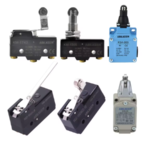 Limit Switches
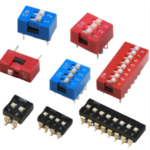 DIP Switches
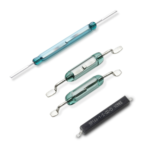 Reed Switches
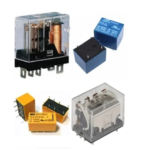 Relays & Modules
 Automotive Relays
 Cube Relays
 Industrial Relays
 Power Relays
 Relay Modules
 Signal Relays
 Solid State Relays (SSR)
 Solenoids & Valves
 Solenoid Valves
 Door Lock Solenoids
 Motors & Actuators
 Drivers & Controllers
 Linear Motion & Structure
 Robot Mechanics
 Pneumatics & Fluid
 Screws & Bolts
 Allen (Socket Head Cap) Screws
 Machine Screws (Phillips)
 Nuts & Inserts
 Washers, Spacers & Rings
 Circlips & E-Clips
 PCB Spacers & Standoffs
 Brass inserts
 Others
 Disc Magnets
 Cylinder Magnets
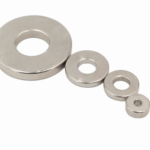 Ring Magnets
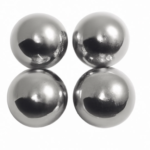 Sphere Magnets
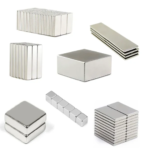 Block Magnets
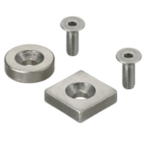 Countersunk Magnets
 Diametrically Magnetized Magnets
 Soldering & Rework
 Soldering Irons & Stations
 Soldering Iron Tips & Bits
 Rework Stations
 Solder Wire
 Flux & Paste
 Desoldering Tools
 Accessories & PCB Repair
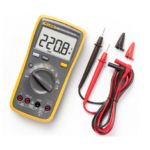 Test & Measurement
 Hand Tools
 Drilling & Threading
 Crimping Tools
 Workshop Essentials
 Power Sources
 3D Printer filaments
 PLA+
PLA+ PLA-CF
 PLA Metallic
 PETG-CF